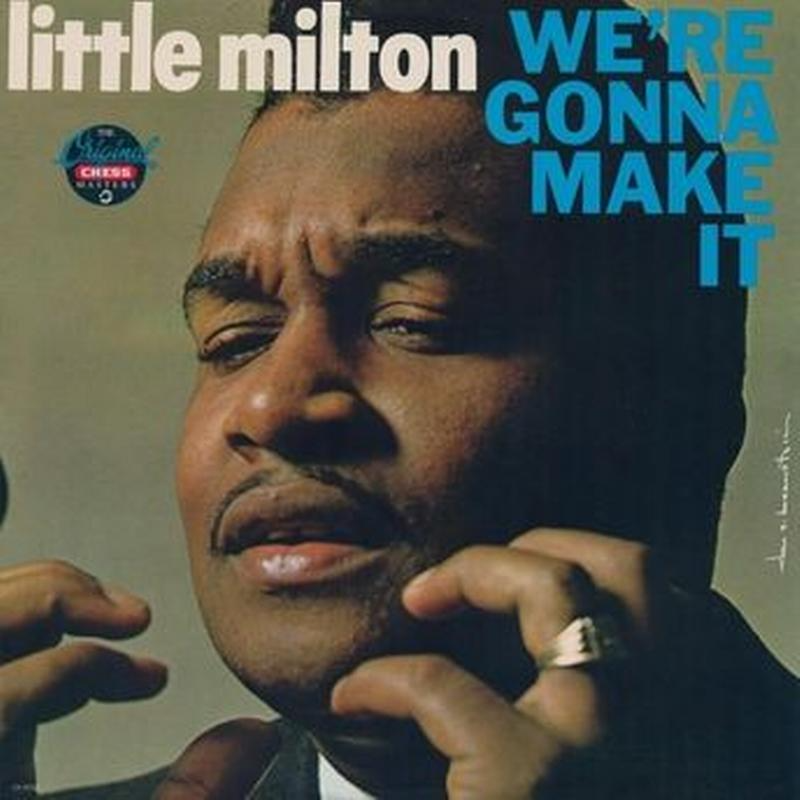
Paru en 1965 sur le label Checker Records, "We're Gonna Make It" marque une étape décisive dans la carrière de Little Milton. Né James Milton Campbell dans le Mississippi, le chanteur et guitariste s'était déjà forgé une solide réputation dans le circuit du blues avant de rejoindre la famille Chess au début des années 1960.
L'album est dominé par le succès du titre "We're Gonna Make It", une chanson devenue emblématique de son répertoire. Son message d'espoir et de persévérance a trouvé un écho particulier dans l'Amérique des années 1960, en pleine période de lutte pour les droits civiques. Le single atteint la première place du classement R&B et permet à Little Milton de toucher un public beaucoup plus large.
Tout au long de l'album, Little Milton démontre son talent unique pour fusionner le blues traditionnel avec les sonorités soul qui s'imposent alors dans la musique afro-américaine. Sa voix expressive, son jeu de guitare raffiné et des arrangements soignés donnent naissance à un ensemble cohérent où alternent ballades, blues lents et morceaux plus rythmés.
Considéré aujourd'hui comme l'un des enregistrements majeurs de la période Chess / Checker de Little Milton, "We're Gonna Make It" demeure un témoignage essentiel de l'évolution du blues vers la soul durant les années 1960.
Les archives disponibles ne permettent toutefois pas d'identifier avec certitude l'ensemble des musiciens de session ayant participé à l'enregistrement de l'album, les crédits complets n'ayant jamais été publiés ou conservés.
- Little Milton "We're Gonna Make It" !
- Chess Records 75 Series from Chess Records and Acoustic Sounds !
- Stirring chart-topping title track promoted civil rights in America !
- All-analog mastering by Matthew Lutthans at The Mastering Lab !
- 180 gram vinyl pressed at Quality Record Pressings !
Compared to labelmates such as Muddy Waters and Bo Diddley, Little Milton was a late signee to the Chess family, not joining until the early ‘60s. But he'd already had quite a career as a singer and guitarist in the preceding decade and his blues-soul style, often compared to that of B.B. King, brought a new wave of commercial success to the label.
James Milton Campbell was born in 1934 in Mississippi, raised on blues music by his father, a farmer who also played music in his spare time. When he was 12, Milton scraped together some money from odd jobs and purchased his first guitar, which he'd perform for money on local street corners and eventually nearby clubs. He'd sit in with anyone who'd have him future Chess legend Sonny Boy Williamson II had him in his backing band at least once and his devotion to the craft got people noticing.
Chess offered Milton a distribution deal and Milton would begin to record for their Checker imprint starting in 1961. "So Mean to Me", his second single for the label released that same year, became his first chart hit anywhere, reaching N° 14 on the R&B charts. As his sound began to evolve, audiences began to take notice, and in 1965, "We're Gonna Make It" a stirring song utilized as a metaphor for the growing civil rights movement in America not only topped the R&B chart but crossed over into the pop survey, reaching N° 25 on the Billboard Hot 100. More hits followed on Checker through the ‘60s and even into the early ‘70s, including "Who's Cheating Who ?" (1965), "Feel So Bad" (1966), "Grits Ain't Groceries" (1968), "If Walls Could Talk" (1969) and 1970's "Baby, I Love You", made famous several years earlier by Aretha Franklin.
Little Milton would depart Checker not long after Chess was sold, signing to Stax Records for a time and appearing at the label's historic Wattstax benefit concert in Los Angeles. He remained a living legend of the blues for the next few decades: he was inducted into the Blues Hall of Fame and earned a W.C. Handey Award for Blues Entertainer of the Year in 1988, and was still actively recording when he died in 2005.