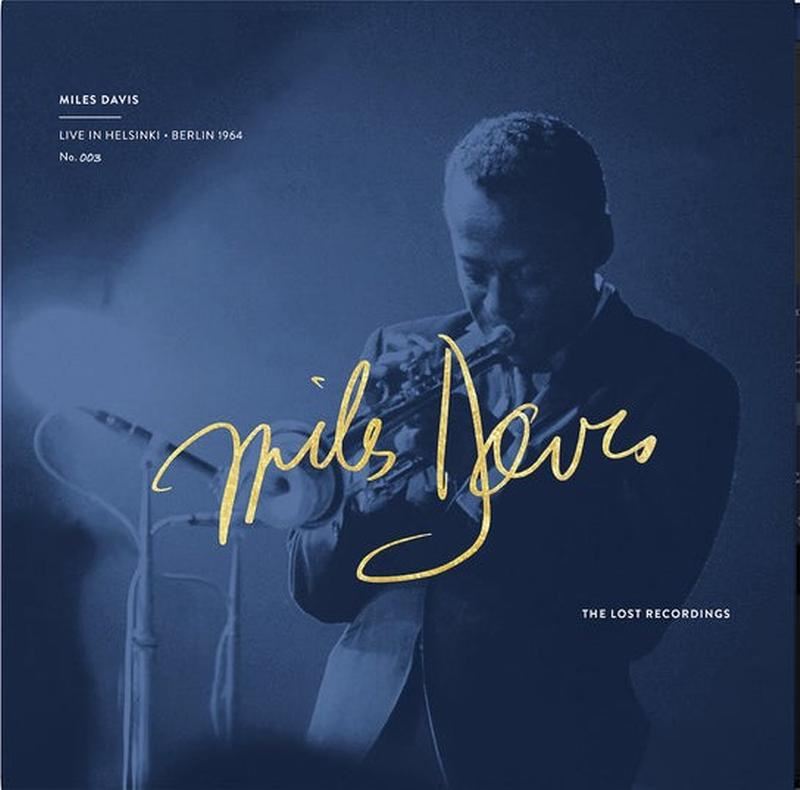
Deux concerts d'exception, une formation légendaire et une qualité sonore hors du commun. Avec "Live in Helsinki • Berlin 1964", The Lost Recordings nous plonge au cœur de l'une des périodes les plus inspirées de Miles Davis. Accompagné de Wayne Shorter, Herbie Hancock, Ron Carter et Tony Williams, le trompettiste livre deux performances magistrales enregistrées à Berlin le 25 septembre 1964 et à Helsinki le 6 octobre 1964, au moment où son mythique Second Great Quintet est en pleine évolution artistique.
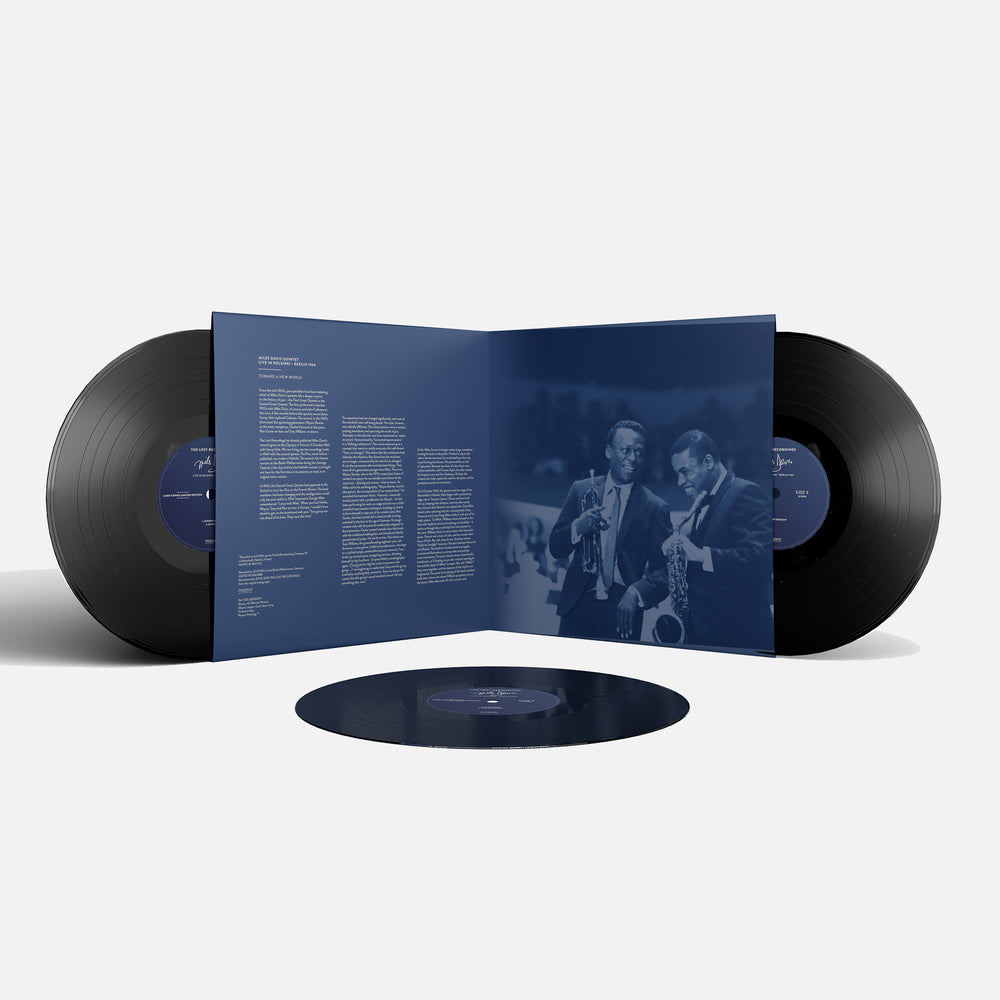
Restaurées avec le plus grand soin à partir des bandes originales, ces archives retrouvent toute leur intensité grâce au savoir-faire de The Lost Recordings. Cette édition audiophile en 3 vinyles 180 gram gravés en 45 RPM offre une restitution d'une remarquable finesse, avec une dynamique, une présence et une profondeur qui rapprochent l'auditeur de l'émotion du concert. Le choix du pressage en 45 RPM permet une gravure plus généreuse et révèle toute la richesse des instruments ainsi que les nuances du jeu de chaque musicien.
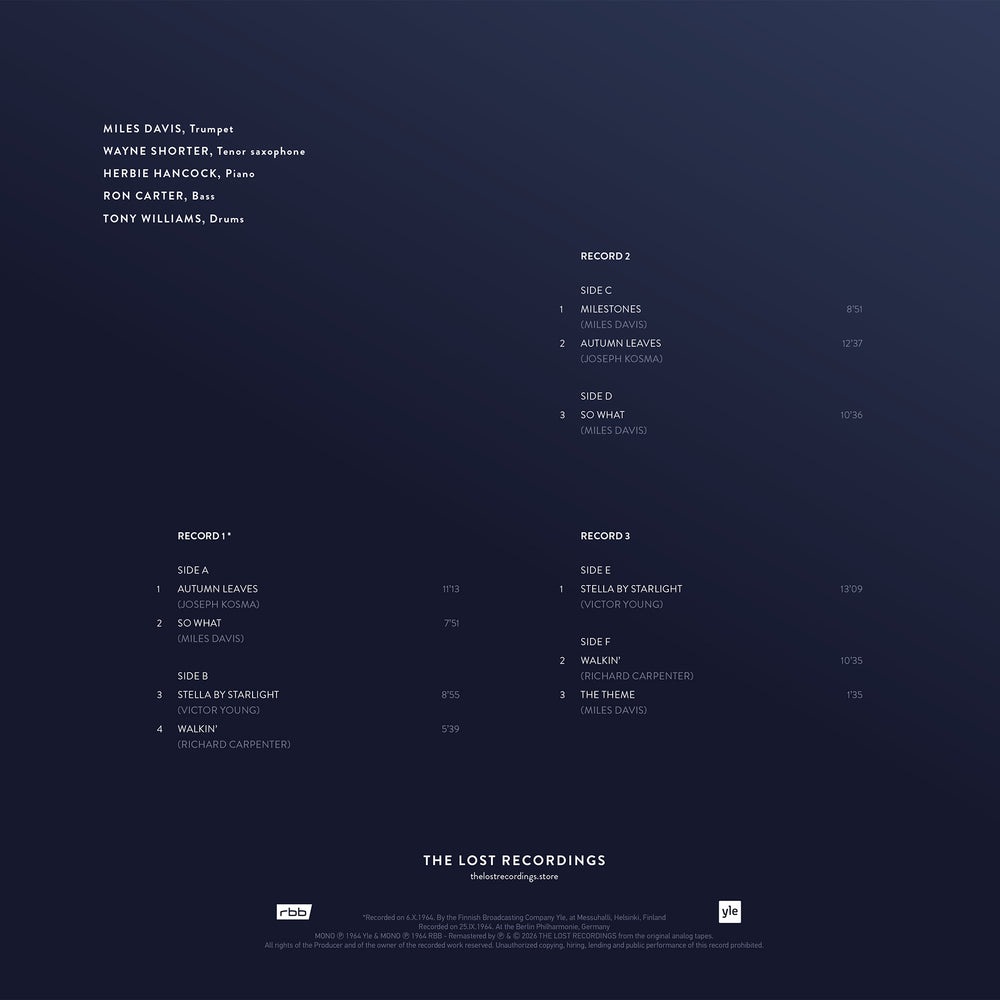
Le programme réunit quelques-uns des plus grands classiques du répertoire de Miles Davis, parmi lesquels Autumn Leaves, So What, Stella by Starlight, Walkin', Milestones et The Theme, interprétés avec une liberté, une complicité et une créativité qui ont fait entrer cette formation dans la légende du jazz.
Éditée à seulement 4000 exemplaires dans le monde, cette version constitue une véritable pièce de collection. Elle séduira autant les audiophiles exigeants que les passionnés de jazz et les collectionneurs à la recherche d'une édition rare, réalisée avec un soin exceptionnel.
À la fois document historique et référence audiophile, "Live in Helsinki • Berlin 1964" est un hommage remarquable à l'un des plus grands quintettes de l'histoire du jazz, sublimé par une restauration et un pressage qui perpétuent l'excellence de The Lost Recordings.
- Miles Davis "Live In Helsinki-Berlin 1964"
- 180 gram mono (3 LP) 45 RPM limited to 4000 hand-numbered copies !
- Meticulously restored from original analog tapes !
- Lacquers cut by Kevin Gray at Cohearent Audio !
- Pressed by Phoenix Pressings !
- Tip-on gatefold jacket printed in Italy !
The Lost Recordings has already published Miles Davis's concert given at the Olympia in Paris on October 11, 1960 with Sonny Stitt. We now bring you two recordings made in 1964 with the second quintet. The first, never before published, was made in Helsinki. The second, the famous concert at the Berlin Philharmonie during the Jazztage Festival, a few days before the Helsinki concert, is brought out here for the first time in its entirety on vinyl, in its original mono version.
In 1963, the Second Great Quintet had appeared at the festival in Juan-les-Pins on the French Riviera. The band members had been changing and the configuration would only become stable in 1964. Impresario George Wein remembered : "I once told Miles, ‘When you had Herbie, Wayne, Tony and Ron on tour in Europe, I wouldn't have dared to get on the bandstand with you'. That group was not ahead of its time. They were the time".
The repertoire had not changed significantly and most of the standards were still being played. The style, however, was radically different. The interpretations were inventive, pushing boundaries and upturning the world of jazz.
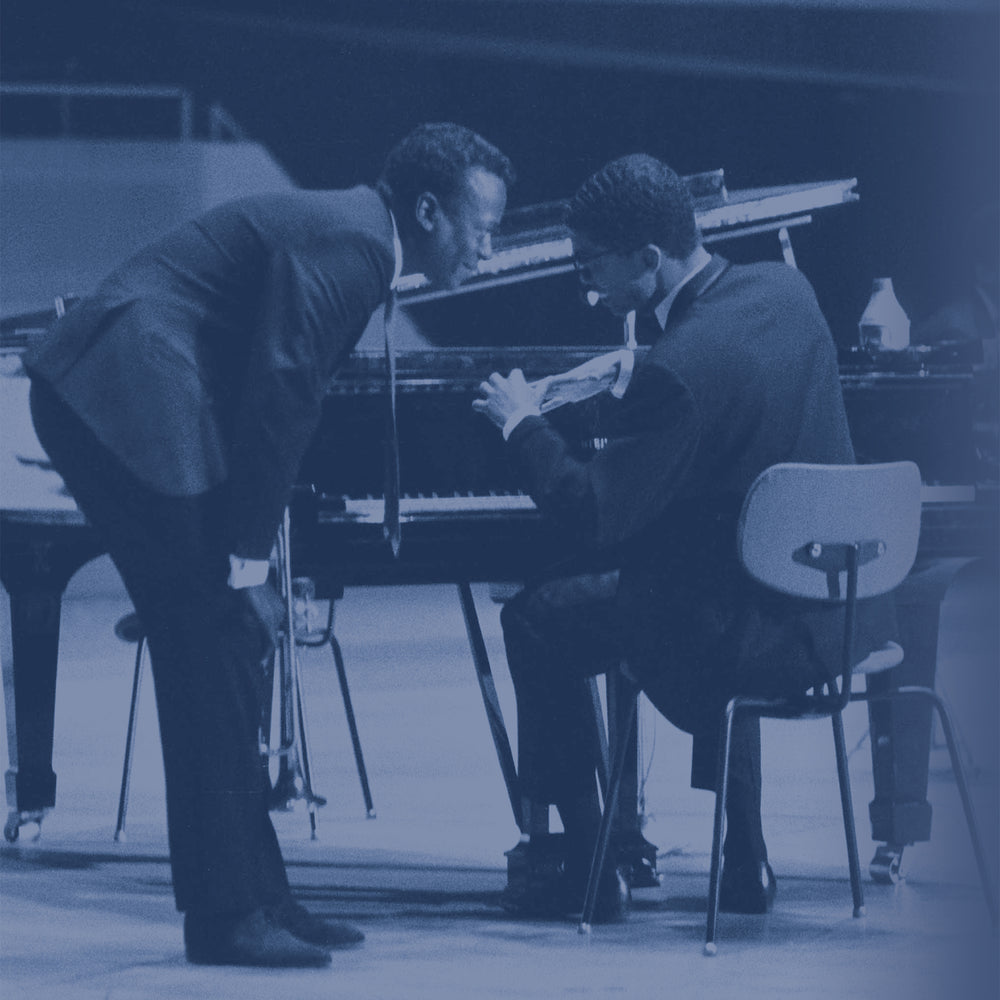
It was the newcomers who revolutionized things. They were all of a generation younger than Miles. There was Wayne Shorter, who in the 1970s created jazz fusion. A cerebral sax player, he was initially more drawn to the visual arts drawing and cinema than to music. As Miles said in his autobiography, "Wayne Shorter was the idea person, the conceptualizer of our musical ideas". He extended the harmonic limits. Hancock, a classically trained pianist with a predilection for Mozart he had been performing his works on stage since he was a child reworked improvisation techniques, breaking up chords to force himself to step out of his comfort zone. Ron Carter, who had started with a classical cello training, switched to the bass at the age of fourteen. No longer content only with the pizzicati traditionally relegated to the instrument, Carter created melodic lines that break with the traditional walking bass and introduced silently spaced interval jumps. He set form free. Then there was Tony Williams, the groundbreaking eighteen-year-old drummer, a true genius. Unlike his predecessors, who kept to a cyclical tempo, predictable because recurrent, Tony broke up musical space, instigating tensions, throwing himself to the forefront. To quote Miles's autobiography again, "Tony just lit a big fire under everyone in the group... I was beginning to realize that Tony and this group could play anything they wanted to. Tony was always the center that the group's sound revolved around. He was something else, man".
As for Miles, he was no longer center stage, sometimes turning his back on the public. He liked to slip to the side to let the musicians he so admired have free rein in performing the themes. His personal life was full of upheavals. Between two lines of coke, there were violent interludes with Frances Taylor, his wife, marked by frequent rows and fits of jealousy. Perhaps this context also helps explain his need for disruption and his precipitous search for innovation.
Perhaps we can say that a turning point in the history of jazz was reached late in 1964 during these legendary concerts given by Miles Davis's Second Great Quintet. The entire future of the genre was budding in the hands of this new generation of upstarts. Rhythm was now primordial, with violent fits and raw energy. Yet the lyricism of old times was never completely forgotten, soaring out unexpectedly with notes of tenderness that sometimes verged on despair and nostalgia. These are extraordinary moments of pleasure, a magical fulcrum between two eras.