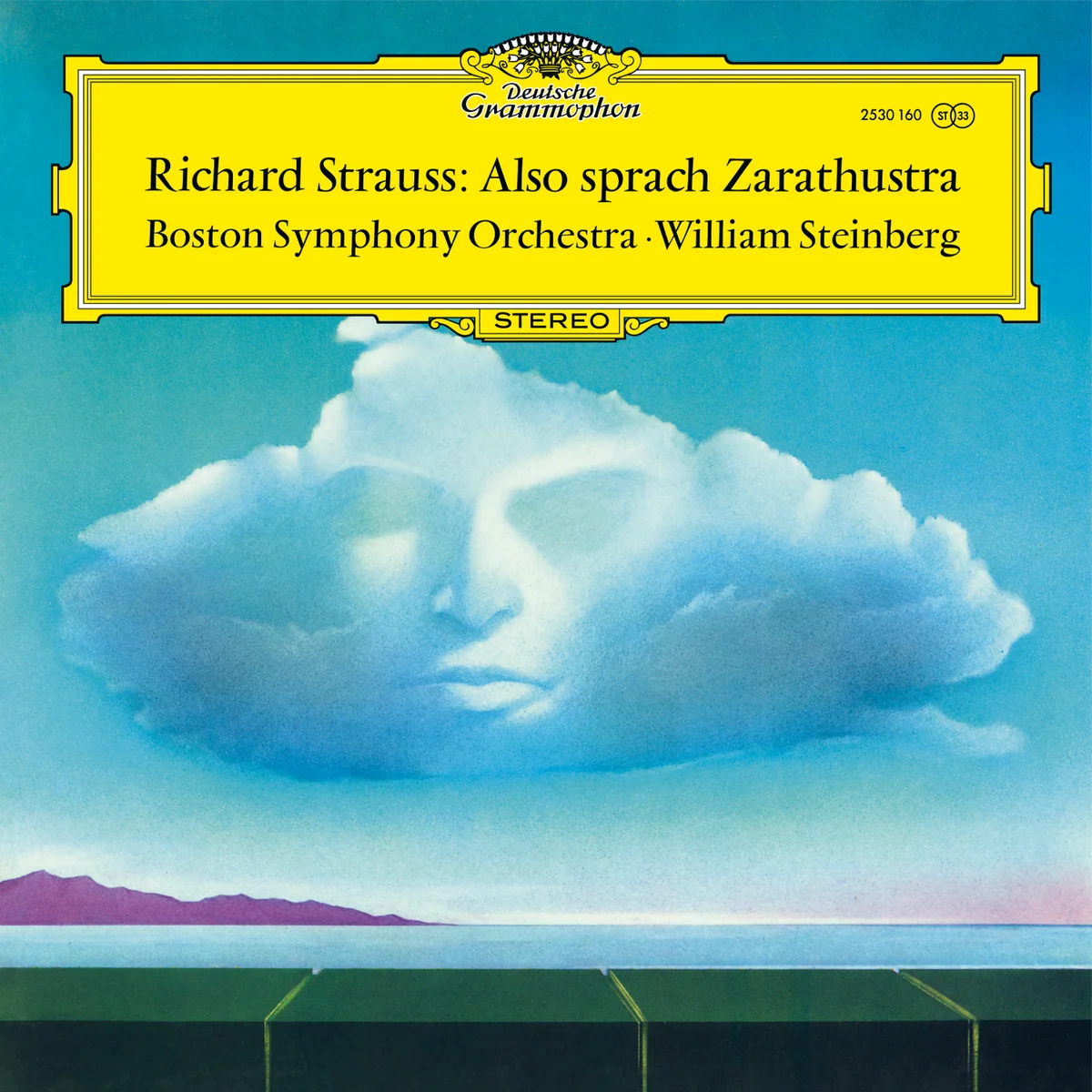
- Richard Strauss "Also sprach Zarathustra, Op. 30" !
- Boston Symphony Orchestra – William Steinberg !
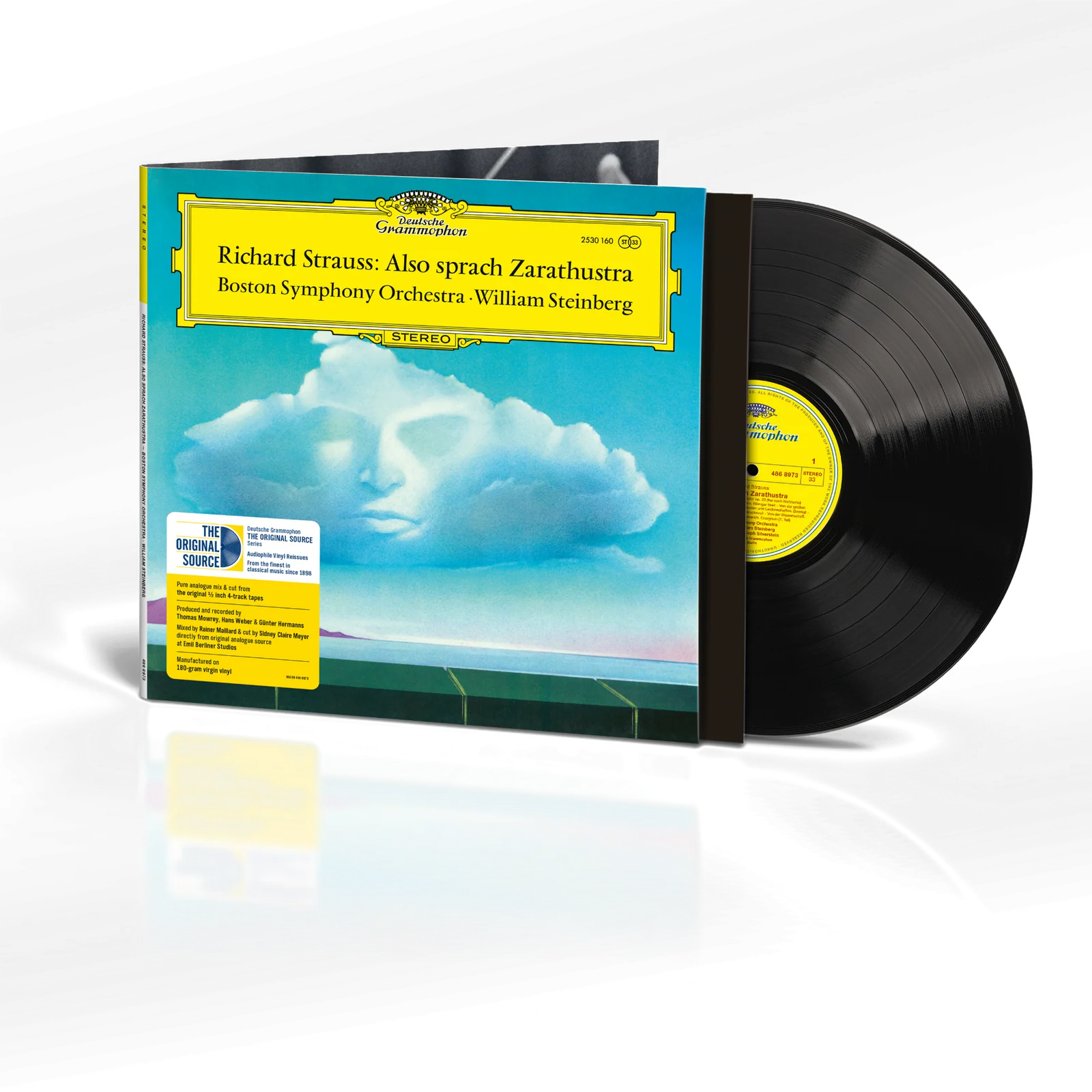
- Deutsche Grammophon – The Original Source Series – 180 gram AAA Stereo Vinyl LP – Deluxe Gatefold Edition !
Originally recorded on March 24, 1971, at Boston's Symphony Hall, Richard Strauss's monumental tone poem Also sprach Zarathustra receives an extraordinary interpretation from the Boston Symphony Orchestra under the direction of William Steinberg.
Inspired by Friedrich Nietzsche's philosophical work of the same name, Also sprach Zarathustra, Op. 30, composed in 1896, stands among the most ambitious and visionary orchestral masterpieces of the late Romantic era.
Through an extraordinary combination of orchestral brilliance, philosophical symbolism, and dramatic contrasts, Strauss explores humanity's search for knowledge, spiritual transformation, and the mysteries of existence.
The work's legendary opening, Einleitung, oder Sonnenaufgang (Introduction, or Sunrise), has become one of the most recognizable passages in classical music, achieving worldwide fame through Stanley Kubrick's cinematic masterpiece 2001: A Space Odyssey.
Yet beyond this celebrated introduction lies an immensely sophisticated musical composition, revealing Strauss's exceptional command of orchestral color, harmonic complexity, and large-scale musical architecture.
William Steinberg's interpretation combines remarkable structural clarity, powerful orchestral sonorities, and exceptional rhythmic precision, allowing the Boston Symphony Orchestra to reveal the full expressive richness of this extraordinary score.
A Monumental Orchestral Journey Through Nine Sections
I. Einleitung, oder Sonnenaufgang – Introduction, or Sunrise
The work opens with one of the most spectacular orchestral introductions ever composed.
Emerging from the profound depths of the orchestra, the famous three-note ascending trumpet motif unfolds over a sustained low C, gradually building toward an overwhelming climax featuring the full orchestra, powerful brass, organ, and percussion.
Steinberg's commanding interpretation emphasizes the architectural grandeur of this celebrated passage, allowing the Boston Symphony Orchestra to deliver an extraordinary demonstration of orchestral power and dynamic control.
II. Von den Hinterweltlern – Of the Backworldsmen
Following the monumental opening, Strauss introduces an atmosphere of spiritual contemplation and religious devotion.
Rich string textures, expressive melodic lines, and carefully balanced orchestral harmonies create a deeply introspective musical landscape.
Steinberg brings warmth and refinement to this section, highlighting the contrast between the overwhelming grandeur of the introduction and the more intimate emotional character of the music.
III. Von der großen Sehnsucht – Of the Great Longing
This section explores an intense atmosphere of aspiration, uncertainty, and spiritual yearning.
Strauss develops expressive melodic gestures through increasingly complex orchestral textures, combining lyrical passages with moments of dramatic tension.
The Boston Symphony Orchestra's remarkable instrumental discipline allows the contrasting musical ideas to emerge with exceptional clarity.
IV. Von den Freuden und Leidenschaften – Of Joys and Passions
A sudden explosion of orchestral energy introduces one of the work's most emotionally charged passages.
Sweeping string melodies, powerful brass statements, and urgent rhythmic figures convey the intensity of human passion and desire.
Steinberg's precise control of orchestral dynamics gives this section an extraordinary sense of momentum while preserving the clarity of Strauss's intricate instrumental writing.
V. Das Grablied – The Song of the Grave
The atmosphere becomes darker and more contemplative as Strauss turns toward themes of mortality, remembrance, and loss.
Expressive string writing and subtle harmonic transformations create a deeply moving musical meditation.
Steinberg emphasizes the emotional depth of this section through carefully shaped phrasing and restrained orchestral intensity, allowing the Boston Symphony Orchestra's rich string sonorities to emerge with remarkable sensitivity.
VI. Von der Wissenschaft – Of Science
One of the most intellectually fascinating passages of the work, Von der Wissenschaft features a remarkable fugue built around a theme encompassing all twelve notes of the chromatic scale.
Strauss's sophisticated contrapuntal writing creates an atmosphere of intellectual exploration and increasing musical complexity.
Steinberg's exceptional structural discipline is particularly evident here, as the intricate instrumental lines remain clearly defined throughout the development.
VII. Der Genesende – The Convalescent
Among the most dramatic sections of the entire composition, Der Genesende brings the musical tensions accumulated throughout the work toward an immense orchestral climax.
Powerful brass passages, complex rhythmic structures, and increasingly intense orchestral textures culminate in a moment of overwhelming dramatic force.
Following this extraordinary climax, the music gradually transforms, introducing a more reflective and mysterious atmosphere.
Steinberg's interpretation reveals the remarkable contrast between the section's monumental orchestral power and its subsequent passages of expressive refinement.
In this vinyl edition, Der Genesende is divided between the two sides of the record.
VIII. Das Tanzlied – Das Nachtlied – The Dance Song / The Night Song
The music takes on a more lyrical and graceful character, introducing an elegant waltz that provides a striking contrast to the preceding dramatic passages.
Strauss's imaginative orchestration features an expressive solo violin, delicate instrumental exchanges, and richly colored orchestral textures.
The Boston Symphony Orchestra performs these passages with exceptional elegance, while Steinberg carefully balances the music's playful rhythmic character with its underlying emotional complexity.
As the section progresses, the atmosphere becomes increasingly introspective, revealing the poetic beauty of Strauss's orchestral imagination.
IX. Das Nachtwandlerlied – The Song of the Night Wanderer
The final section brings this extraordinary musical journey to a mysterious and philosophically ambiguous conclusion.
Rather than resolving the work through a conventional triumphant finale, Strauss creates a remarkable harmonic contrast between the tonal centers of B major and C major.
The music gradually retreats into an atmosphere of stillness and uncertainty, leaving the listener with a profound sense of unresolved philosophical questioning.
Steinberg's carefully controlled interpretation highlights the extraordinary subtlety of this conclusion, allowing the final orchestral textures to disappear into silence with exceptional refinement.
William Steinberg and the Boston Symphony Orchestra – A Legendary Interpretation
William Steinberg served as principal conductor of the Boston Symphony Orchestra from 1969 to 1972, bringing his exceptional musical discipline and extensive experience in the German orchestral repertoire to one of America's most distinguished ensembles.
Although his collaboration with Deutsche Grammophon produced only a limited number of recordings, these performances remain highly regarded for their interpretative authority, orchestral precision, and remarkable recorded sound.
In Also sprach Zarathustra, Steinberg demonstrates an exceptional understanding of Strauss's complex musical architecture, maintaining a convincing sense of continuity throughout the work's contrasting sections.
The Boston Symphony Orchestra responds with magnificent instrumental playing, combining brilliant brass sonorities, richly textured strings, expressive woodwinds, and powerful percussion.
Particularly impressive are the monumental opening sunrise, the intricate contrapuntal writing of Von der Wissenschaft, the overwhelming orchestral climax of Der Genesende, and the extraordinary tonal ambiguity of the final pages.
Recorded in the renowned acoustic environment of Boston's Symphony Hall, this performance offers an exceptional combination of orchestral grandeur, musical refinement, and interpretative coherence.
Deutsche Grammophon – The Original Source Series
This prestigious audiophile reissue belongs to Deutsche Grammophon's acclaimed The Original Source series, dedicated to rediscovering outstanding analog recordings from the 1970s through an uncompromising all-analog production process.
Working from the original four-track and eight-track analog master tapes, the renowned Emil Berliner Studios have developed specialized technologies enabling these historic recordings to be remixed, mastered, and cut entirely in the analog domain.
This 100 % analog (AAA) process is designed to preserve the authenticity and musical character of the original recordings while revealing enhanced instrumental separation, greater spatial definition, improved tonal clarity, and a wider dynamic range.
The results are particularly impressive with a monumental orchestral composition such as Also sprach Zarathustra, where the reproduction of powerful brass passages, deep organ frequencies, complex orchestral textures, and subtle dynamic contrasts is essential to the musical experience.
The legendary opening sunrise benefits from the recording's extraordinary dynamic potential, while the more intimate passages reveal the natural tonal richness and delicate instrumental details of the Boston Symphony Orchestra.
The transparent reproduction of the orchestra's different sections allows listeners to appreciate the full complexity of Strauss's sophisticated orchestration, from the most delicate string passages to the overwhelming climaxes of the complete ensemble.
Pressed on premium 180 gram vinyl, this edition is presented in a luxurious deluxe gatefold sleeve, featuring the original artwork and liner notes, additional photographs, and facsimiles of the original recording documentation and tape boxes.
Following the strong demand for the original numbered release, Deutsche Grammophon has made this exceptional recording available again in an unnumbered edition.
Combining Richard Strauss's visionary orchestral masterpiece, William Steinberg's authoritative interpretation, the magnificent playing of the Boston Symphony Orchestra, and the exceptional all-analog remastering of The Original Source series, this recording represents an outstanding addition to any serious classical music collection.
An essential audiophile edition of one of the most spectacular and influential orchestral compositions ever recorded.